
Are you a ‘second career’ artist?
Why a midlife traumatic moment killed my muse and pivoted my creative career from the written word to blobs of paint.

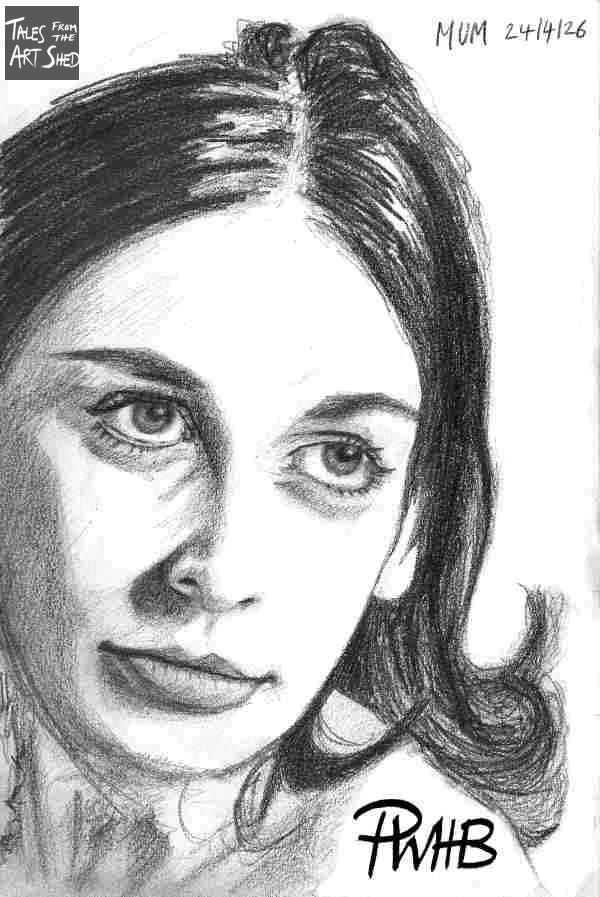
It’s 5 years today (April 23rd 2026) since my mum passed away. This isn’t a piece about grief or losing a parent, but it is about a significant decision I made following that life-changing event.
It wasn’t like the day after she died, but I’d been getting increasingly itchy feet about wanting to concentrate on my own creative projects, which back then were various half researched, half drafted novels. I’d finished a novel (that had got me interest with an agent but unfortunately was never published) several years before and I’d not really written since because all hours had been spent building up my little publishing empire. I was full-on in the middle of running my book publishing imprint (I didn’t have time or money to spend during Covid learning to play guitar) where I took risks with my own time and money to publish a small cohort of authors in various genres from non-fiction, local history, children’s books and fiction. Perhaps I should have followed the words of my sales guy, an experienced book sales agent in the publishing industry, who had advised I find a niche. But that’s all connected with the theme of this post: the, so called, ‘second career’. In other words, if you’re a creative person where your brain just bugs you on a daily basis with more ideas than there are hours in the day, it’s a fair bet you’ll want to keep changing your career path to carve out time to spend your days trying to bring your imaginings to life.
I’ve always told people that I’m a jack of some trades, master of none. Since graduating in the 90s, my career path would probably look like an oxbow lake from the air. My first proper job was a computer programmer but after a few years it didn’t take me long to realise that, to me, it was utterly dull and a universe away from my love of graphics and computer games, which as a child of the 80s had inspired me enough to embrace my inner geek and learn coding, so I could work out how those little sprites moved across the screen.
But, looking back, one consistent element of my snaking ‘career’ (that word makes me shudder) has been moving into roles (mark that word up for the bin too) that have enabled me to be creative, such as interactive tv, web design, graphic design, copywriting, publishing and eventually fiction writing. I’ve become accustomed to letting my head be ruled by my passions instead of sticking to a solid career path, but I don’t recommend it if you crave a secure solid income, job security and climbing the career ladder in your chosen industry.
I often need something significant to push me into making a new decision about my life, so I can reflect on what I really want to do with my time on Earth. I can’t blame those early years of commuting to London in stressful jobs. On those train journeys I wrote stories, the carriage then filled with commuters reading newspapers, books or listening to iPods. Yes, I know that dates me. There was no watching Slopfix on smart phones back then. And yes, the early stories were bloody dreadful but I loved it, and it lead me to change career from tech into writing.
It took me a few years to come through my grief over losing Mum, and when I did start functioning again I was changed. I had lost my writing ‘muse’. Something I never thought would happen. The wirlwind of narrative ideas and characters and locations and scenes had ceased. I remembered years back when I was contacted by a writer who wanted me to publish a collection of poems which I thought were wonderful. When I asked him if he was going to write more he had told me that they were written some time ago, but following the death of his wife he had just woke up one day also bereft of muse. Honestly, that just terrified me. I just didn’t think it would ever happen to me. And then it did. My creative muse just vanished. I know this is often a symptom of grief, but was it really to do with losing Mum? Was I having a mid-life crisis? Had I been delusional about my creativity all this time? Was this how ‘normal’ people felt, not having a head full of creative ideas insisting they be realised? I’m glad to say, it didn’t last forever, so if this has happened to you then please read on.
I can’t exactly remember why I suddenly got the urge to do some painting and drawing, but it was a few years ago now. There were practical reasons of just being fed up of spending long days on the computer. Even if I was doing something creative, like book cover design, it was still on a computer, moving and clicking a mouse. Click, click, click. I had also been thinking back to my childhood, like you do, and reflecting on how I used to spend my time. I was either on a BMX, or playing Lego but mostly drawing. Drawing, drawing, drawing. I recently reconnected with a childhood friend and he remembered how good I was at art and how it had gone around at school between my mates at how surprised they were that I had got a shit mark for my exam. School killed my love of art, or at least fine art, if we want to call it that. The fine art teacher just didn’t seem to understand what art I liked at the time, so perhaps she might connect with me, adapt her methods, find a way in to inspire me, like a great teacher does. It was different back then. It was one size fits all. I was interested in graphic novels, comics and science fiction, and art at school was none of that. I just had no interest in going out into the grounds and rendering a charcoal drawing of tree bark. When I showed my effort to the art teacher she looked at it for a time before telling me, ‘You made most of this up, didn’t you?’ I confess, I did. I’d really enjoy that exercise now, but back then art education was wasted on me. The graphic design teacher was more inspiring and some of his early advice to me about various techniques like squaring up, composition and rule of thirds has served me well over the years so something must have stuck. But after having to do a dreadful watery painting of the Space Shuttle for a topic on ‘movement’ in my art exam, I just started to loath art. It didn’t help that I’d discovered a new passion: girls.
Throughout my life my mum would often say, after chuckling at silly cards I’d drawn for her birthday or other occasions, ‘You were always good at drawing. You should do more of that!’ Of course, to qualify this, I understand that any parent is not going to be very objective about the quality of the drawings their child hands them to be stuck on the fridge. However, I always found it came naturally to draw, but more importantly, I remembered how much joy visual art brought me. It was a time to escape into my imagination and illustrate the stories playing in my head or to copy heroes from my favourite comics or make my friends laugh with something daft.
I’m in good company being a ‘second career’ artist as there are quite a few well known artists who found their true vocation later in life including:
Henri Rousseau: nicknamed ‘Le Douanier’ which means customs officer, his previous role collecting taxes and tolls.
Vincent Van Gogh: His first calling was in the church as a priest, but he also worked as a teacher, bookseller and art dealer.
Paul Gauguin: He was a stockbroker before doing post-impressions.
And there are countless artists who had previous creative careers, with one famous one springing to mind: Andy Warhol who, before making pop-art global, was a commercial illustrator.
It’s probably the subject of another post, but obviously many creatives have multiple jobs, side hustles, or ‘portfolio careers’ as I liked to say to people when I often had a full-time job while working freelance doing creative stuff in my spare time. The reality is that it’s tough — not impossible — to make a good living from your art in an increasingly expensive world. The media only report on the over-night success stories because they are rare. Most ‘artists’ in whatever field work several jobs or have multiple income streams.
From my experience of changing careers once or twice before, I have found the things I learned in one industry can be used in another. For example, my tech skills have come in so handy for setting up new businesses, creating web sites, marketing, and recently, learning blogging systems like Substack! So, perhaps being a little older and hopefully a little wiser will help me in this new visual art adventure. Watch this space.
So, in summary, technically, I’m a ‘fifth career’ artist. If we assume a ‘career’ is defined as one with an aim to make a modest living where you need to pivot (another one for the cringe bin) to a new industry, climb a learning mountain, ingest new jargon and face associated imposter syndrome before gaining proficiency, then, ignoring random jobs and hobbies, I count my ‘careers’ as five, in order: IT, interactive tv, writing, publishing… and now… visual art. But that just sounds ridiculous, so if somebody wants to label me a ‘second career’ artist then I can live with that.